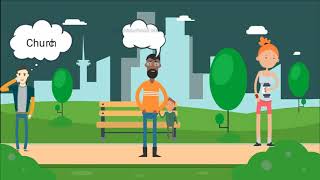
Introduction
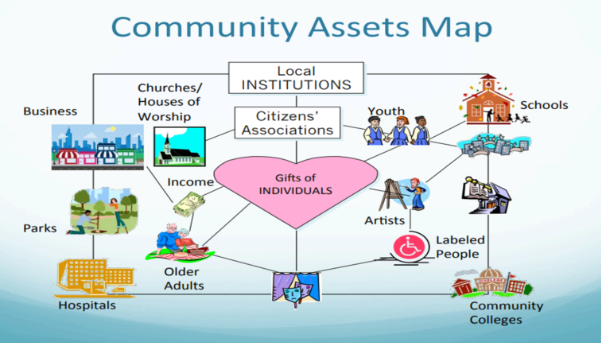
Asset Based Community Development (ABCD) is about recognising and making use of the assets that are already in the community. All communities share certain things in common, from individuals to organisations such as schools, and places of worship, existing groups, and projects; ABCD builds upon the strengths and capacities each has.
This is an appreciative way of working, appreciative because it appreciates and makes best use of these strengths and capacities or ASSETS and asks, ‘What is right, working’. ABCD recognises that the people that live and work in that community are the experts.
Why is the topic important:
Asset based community development (ABCD) is a localised and bottom-up way of strengthening communities through recognising, identifying and harnessing existing 'assets' (i.e. things like skills, knowledge, capacity, resources, experience or enthusiasm) that individuals and communities have which can help to strengthen and improve things locally. Instead of looking at what a community needs or lacks, the approach focuses on utilising the 'assets' that are already there.
The approach facilitates the empowerment of individuals and communities by helping them to identify and share their strengths and then work together to create their own social innovations.
Summary of the key methods:
ABCD</strong starts with Asset Mapping, these are:>
Assets of individuals: Everyone has assets and gifts. Youth, Age, Enthusiasm, Skills.
Association: People discover each other's gifts by coming together in informal groups.
Institutions: These are groups with formal structures, usually paid, such as business, and banking.
Place-Based: Often people choose to live where they do, nice parks, good leisure facilities, Schools etc.
Connections: All the above are kinds of assets, they are the basis of our social relationships and build social capital.
Everyone has gifts and something to contribute.
People build relationships, relationships build communities.
People at the centre, they are not passive recipients.
People in the lead, making the change.
People care if you give them a reason to care.
Listen: Decisions should come from conversations where people are heard.
Asking for ideas is more sustainable than giving solutions.
Inside-out organisation: Local community members are in control.
Challenge
Objective: To identify and map out the various assets within a community, demonstrating how these assets can be utilised to support community development.
Steps:
Define the Community:
- Choose a specific community or neighbourhood to focus on. This could be your own neighbourhood or another community you are familiar with.
Identify Community Assets:
- Individuals: List individuals in the community who have skills, talents, or knowledge that can contribute to the community's development. For example, a local artist, a carpenter, a teacher, etc.
- Associations: Identify local groups, clubs, or organisations. This can include sports teams, cultural groups, neighbourhood associations, etc.
- Institutions: Note down local institutions such as schools, libraries, hospitals, religious centres, and businesses.
- Physical Spaces: Recognise physical spaces like parks, community centres, playgrounds, and any other significant locations.
- Economic Assets: Consider local businesses, markets, and other economic resources.
Create an Asset Map:
- On a large piece of paper or poster board, draw a map of the community.
- Use markers to highlight different areas and label them.
- Use sticky notes or index cards to represent different assets and place them on the map. For example, place a sticky note for the local library on the map where the library is located.
By completing this exercise, you will have a visual representation of the community's strengths and resources. This asset map can serve as a foundational tool for planning community development initiatives that build on existing assets.
Summary of Material:
Materials Needed:
- Large paper or poster board
- Markers or pens
- Sticky notes or index cards
- Camera or smartphone (optional)
The below resources will provide you with some great insight into what ABCD is and some case studies.
Websites (URLs):
Videos from YouTube
Sustainable community development: from what's wrong to what's strong | Cormac Russell | TEDxExeter (youtube.com)

Asset Mapping: What is It? (youtube.com)